
LeetCode21. 合并两个有序链表🌟🌟🌟简单

问题描述
原文链接:21. 合并两个有序链表
将两个升序链表合并为一个新的升序链表并返回。新链表是通过拼接给定的两个链表的所有节点组成的。
示例 1:
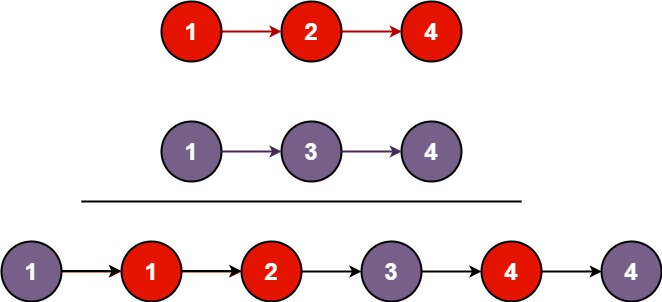
输入:l1 = [1,2,4], l2 = [1,3,4]
输出:[1,1,2,3,4,4]
示例 2:
输入:l1 = [], l2 = []
输出:[]
示例 3:
输入:l1 = [], l2 = [0]
输出:[0]
提示:
- 两个链表的节点数目范围是
[0, 50] -100 <= Node.val <= 100l1和l2均按 非递减顺序 排列
代码实现
Java
/**
 * Definition for singly-linked list.
 * public class ListNode {
 *     int val;
 *     ListNode next;
 *     ListNode() {}
 *     ListNode(int val) { this.val = val; }
 *     ListNode(int val, ListNode next) { this.val = val; this.next = next; }
 * }
 */
class Solution {
    public ListNode mergeTwoLists(ListNode list1, ListNode list2) {
        // 视频里忘了说,其实这个判断可以优化掉,下面的逻辑已经包含了
        // if(list1 == null){
        //     return list2;
        // }
        // if(list2 == null){
        //     return list1;
        // }
        ListNode list3 = new ListNode(-1);
        ListNode temp = list3;

        while(list1 != null && list2 != null){
            if(list1.val <= list2.val){
               temp.next = list1;
               list1 = list1.next;

            } else {
               temp.next = list2;
               list2 = list2.next;
            }
            temp = temp.next;
        }

        // if(list1 != null){
        //     temp.next = list1;
        // }
        // if(list2 != null){
        //     temp.next = list2;
        // }
        // 上面两个也能优化一下,我视频里也忘了说
        temp.next = list1 == null ? list2 : list1;
        return list3.next;
    }
}
Python
# Definition for singly-linked list.
# class ListNode(object):
#     def __init__(self, val=0, next=None):
#         self.val = val
#         self.next = next

class Solution(object):
    def mergeTwoLists(self, list1, list2):
        """
        :type list1: Optional[ListNode]
        :type list2: Optional[ListNode]
        :rtype: Optional[ListNode]
        """
        # 视频里忘了说,其实这个判断可以优化掉,下面的逻辑已经包含了
        # if(list1 == null){
        #     return list2;
        # }
        # if(list2 == null){
        #     return list1;
        # }
        list3 = ListNode(-1)
        temp = list3

        while list1 != None and list2 != None:
            if list1.val <= list2.val:
               temp.next = list1
               list1 = list1.next
            else:
               temp.next = list2
               list2 = list2.next
            temp = temp.next

        # if list1 != None:
        #     temp.next = list1
        # if list2 != None:
        #     temp.next = list2
        # 上面两个也能优化一下,我视频里也忘了说
        temp.next = list1 if list1 != None else list2
        return list3.next
C++
/**
 * Definition for singly-linked list.
 * struct ListNode {
 *     int val;
 *     ListNode *next;
 *     ListNode() : val(0), next(nullptr) {}
 *     ListNode(int x) : val(x), next(nullptr) {}
 *     ListNode(int x, ListNode *next) : val(x), next(next) {}
 * };
 */
class Solution {
public:
    ListNode* mergeTwoLists(ListNode* list1, ListNode* list2) {
        // 视频里忘了说,其实这个判断可以优化掉,下面的逻辑已经包含了
        // if(list1 == null){
        //     return list2;
        // }
        // if(list2 == null){
        //     return list1;
        // }
        ListNode* list3 = new ListNode(-1);
        ListNode* temp = list3;

        while(list1 != nullptr && list2 != nullptr){
            if(list1->val <= list2->val){
               temp->next = list1;
               list1 = list1->next;
            } else {
               temp->next = list2;
               list2 = list2->next;
            }
            temp = temp->next;
        }

        // if(list1 != nullptr){
        //     temp->next = list1;
        // }
        // if(list2 != nullptr){
        //     temp->next = list2;
        // }
        // 上面两个也能优化一下,我视频里也忘了说
        temp->next = list1 == nullptr ? list2 : list1;
        return list3->next;
    }
};
Go
/**
 * Definition for singly-linked list.
 * type ListNode struct {
 *     Val int
 *     Next *ListNode
 * }
 */
func mergeTwoLists(list1 *ListNode, list2 *ListNode) *ListNode {
    // 视频里忘了说,其实这个判断可以优化掉,下面的逻辑已经包含了
    // if(list1 == nil){
    //     return list2;
    // }
    // if(list2 == nil){
    //     return list1;
    // }
    list3 := &ListNode{Val: -1}
    temp := list3

    for list1 != nil && list2 != nil {
        if list1.Val <= list2.Val {
            temp.Next = list1
            list1 = list1.Next
        } else {
            temp.Next = list2
            list2 = list2.Next
        }
        temp = temp.Next
    }

    // if list1 != nil {
    //     temp.Next = list1
    // }
    // if list2 != nil {
    //     temp.Next = list2
    // }
    // 上面两个也能优化一下,我视频里也忘了说
    if list1 == nil {
        temp.Next = list2
    } else {
        temp.Next = list1
    }
    return list3.Next
}