二叉树的最近公共祖先 中等

课后作业
问题描述
原文链接:236. 二叉树的最近公共祖先
给定一个二叉树, 找到该树中两个指定节点的最近公共祖先。
百度百科中最近公共祖先的定义为:“对于有根树 T 的两个节点 p、q,最近公共祖先表示为一个节点 x,满足 x 是 p、q 的祖先且 x 的深度尽可能大(一个节点也可以是它自己的祖先)。”
示例 1:
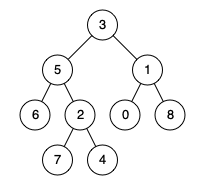
输入:root = [3,5,1,6,2,0,8,null,null,7,4], p = 5, q = 1
输出:3
解释:节点 5 和节点 1 的最近公共祖先是节点 3 。
示例 2:
输入:root = [3,5,1,6,2,0,8,null,null,7,4], p = 5, q = 4
输出:5
解释:节点 5 和节点 4 的最近公共祖先是节点 5 。因为根据定义最近公共祖先节点可以为节点本身。
示例 3:
输入:root = [1,2], p = 1, q = 2
输出:1
提示:
- 树中节点数目在范围
[2, 105]内。 -109 <= Node.val <= 109- 所有
Node.val互不相同。 p != qp和q均存在于给定的二叉树中。
代码实现
Java
/**
 * Definition for a binary tree node.
 * public class TreeNode {
 *     int val;
 *     TreeNode left;
 *     TreeNode right;
 *     TreeNode(int x) { val = x; }
 * }
 */
class Solution {
    public TreeNode lowestCommonAncestor(TreeNode root, TreeNode p, TreeNode q) {
        if(root == null){
            return null;
        }
        //情况1:如果 p 或者 q 和根重合,说明此时 根为最近祖先
        if(root.val == p.val || root.val == q.val){
            return root;
        }

        // 目的:缩小范围
        // p,q是否都在root的左子树
        if(find(root.left, q) && find(root.left, p)){
            return lowestCommonAncestor(root.left, p, q);
        }
        // p,q是否都在root的右子树
        if(find(root.right, q) && find(root.right, p)){
            return lowestCommonAncestor(root.right, p, q);
        }

        return root;
    }

    // 判断 t 是否是 root 的子树
    boolean find(TreeNode root, TreeNode t){
        if(root == null){
            return false;
        }

        if(root.val == t.val){
            return true;
        }

        return find(root.left, t) || find(root.right, t);
    }
}
Python
# Definition for a binary tree node.
# class TreeNode(object):
#     def __init__(self, x):
#         self.val = x
#         self.left = None
#         self.right = None

class Solution(object):
    def lowestCommonAncestor(self, root, p, q):
        """
        :type root: TreeNode
        :type p: TreeNode
        :type q: TreeNode
        :rtype: TreeNode
        """
        if not root:
            return None
        # 情况1: 如果 p 或者 q 和根重合,说明此时 根为最近祖先
        if root.val == p.val or root.val == q.val:
            return root

        # 目的:缩小范围
        # p, q 是否都在 root 的左子树
        if self.find(root.left, q) and self.find(root.left, p):
            return self.lowestCommonAncestor(root.left, p, q)
        # p, q 是否都在 root 的右子树
        if self.find(root.right, q) and self.find(root.right, p):
            return self.lowestCommonAncestor(root.right, p, q)

        return root

    # 判断 t 是否是 root 的子树
    def find(self, root, t):
        if not root:
            return False

        if root.val == t.val:
            return True

        return self.find(root.left, t) or self.find(root.right, t)
C++
/**
 * Definition for a binary tree node.
 * struct TreeNode {
 *     int val;
 *     TreeNode *left;
 *     TreeNode *right;
 *     TreeNode(int x) : val(x), left(NULL), right(NULL) {}
 * };
 */
class Solution {
public:
    TreeNode* lowestCommonAncestor(TreeNode* root, TreeNode* p, TreeNode* q) {
        if (!root) {
            return nullptr;
        }
        // 情况1: 如果 p 或者 q 和根重合,说明此时 根为最近祖先
        if (root->val == p->val || root->val == q->val) {
            return root;
        }

        // 目的:缩小范围
        // p, q 是否都在 root 的左子树
        if (find(root->left, q) && find(root->left, p)) {
            return lowestCommonAncestor(root->left, p, q);
        }
        // p, q 是否都在 root 的右子树
        if (find(root->right, q) && find(root->right, p)) {
            return lowestCommonAncestor(root->right, p, q);
        }

        return root;
    }

    // 判断 t 是否是 root 的子树
    bool find(TreeNode* root, TreeNode* t) {
        if (!root) {
            return false;
        }

        if (root->val == t->val) {
            return true;
        }

        return find(root->left, t) || find(root->right, t);
    }
};
Go
/**
 * Definition for a binary tree node.
 * type TreeNode struct {
 *     Val   int
 *     Left  *TreeNode
 *     Right *TreeNode
 * }
 */

func lowestCommonAncestor(root, p, q *TreeNode) *TreeNode {
    if root == nil {
        return nil
    }
    // 情况1: 如果 p 或者 q 和根重合,说明此时 根为最近祖先
    if root.Val == p.Val || root.Val == q.Val {
        return root
    }

    // 目的:缩小范围
    // p, q 是否都在 root 的左子树
    if find(root.Left, q) && find(root.Left, p) {
        return lowestCommonAncestor(root.Left, p, q)
    }
    // p, q 是否都在 root 的右子树
    if find(root.Right, q) && find(root.Right, p) {
        return lowestCommonAncestor(root.Right, p, q)
    }

    return root
}

// 判断 t 是否是 root 的子树
func find(root, t *TreeNode) bool {
    if root == nil {
        return false
    }

    if root.Val == t.Val {
        return true
    }

    return find(root.Left, t) || find(root.Right, t)
}